
Understanding the 34 APEGS CBA Competency Categories
In Saskatchewan, Canada, it is a must for engineers who want to have a professional title to know the APEGS CBA Competency Report thoroughly, as it is the main consideration in the licensing process. The CBA method is founded on the applicant’s professional judgement and abilities, which APEGS (Association of Professional Engineers and Geoscientists of Saskatchewan) considers when applying the method.
How to Address APEGS Competencies
The whole process is composed of 34 skill categories that are very clearly defined. These include technical skills, as well as professional conduct, ethics, and overall effectiveness. This website provides the 34 competency areas, their structure, and possible applicant approaches with assistance from professional services like Australian CDR Help.
Getting Acquainted with the APEGS Competency-Based Assessment Framework
The APEGS CBA model not only considers academic qualifications but also utilizes real evidence to assess the competencies of the engineers in the respective field. The candidates have to provide a narration of their work experiences, which are the strongest proof of their engineering knowledge, ability to manage responsibilities, communication, and adherence to legal and moral standards.
The CBA competency report is a mirror of your skills, the methods you applied, the outcomes achieved, and even the short intervals of your past employment that will ultimately convince the APEGS assessors. Therefore, it would be very difficult, if not impossible, to submit a truly impressive application.
The layout of the 34 competency categories
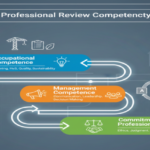
The APEGS CBA Competency Report classifies the thirty-four categories into four primary groups. Each category touches upon a particular area of professional engineering practice, and together they constitute an evaluation framework that is very just, unbiased, and practically oriented for engineers’ daily tasks.
The categories emphasize:
- The level of engineering expertise
- The management and interpersonal skills
- The character and conduct of a responsible professional
- The consideration of environmental, social, and ethical issues
The candidate must attain the corresponding competency at the level of independence required for the gradual passing from supervision to professional judgment.
Category 1: Technical Skills (11 Competencies)
The main emphasis is on Technical Skills
An APEGS assessment is fundamentally based on the technical competency issue. These are the skills that allow an engineer to utilize the theoretical knowledge, tools, and judgment to come up with solutions for real-world problems. APEGS would clearly rather see characteristics like risk-taking, organized thinking, and good decision-making than just the execution of tasks.
1.1 Technical Competency Areas
1.2 Application of engineering concepts and know-how
1.3 Working with the engineering principles and practices at the same time
1.4 Breaking down the problem and finding the solution
1.5 The creation and production of engineering solutions and designs
1.6 Using appropriate engineering gadgets and technologies
1.7 Testing and verifying results
1.8 Recognizing risks and implementing preventive measures
1.9 Reliability and safety considerations
1.10 Nature conservation and eco-friendliness
1.11 Production management and quality assurance
Pushing technology to its limits
Your firm’s claims in this field not only reinforce but also clarify your position, choices, and technical contribution, all of which are backed up by measurable outcomes.
Category 2: Communication and Project Management Skills (Seven Competencies)
Usually, engineering is not performed by one person only. APEGS greatly values the way engineers organize their work, communicate with others, and put forth their ideas.
Justification for the Significance of These Skills
Poor management or communication could lead to technical solutions that are the best but still not feasible. These characteristics indicate your capacity to be a superb collaborator, to handle resources, and to achieve project goals.
Competency Area of This Category
2.1 Technical written communication
2.2 Direct communication with customers and colleagues
2.3 Preparation of technical reports and documents
2.4 Project planning and scheduling
2.5 Budgeting and resource management
2.6 Teamwork and collaboration
2.7 Monitoring progress and managing deliverables
The competency report section is supported by involvement in projects and communication that is active, clear, and targeted.
Category 3: Seven Competencies for Professional Accountability
The competencies that refer to professional accountability are, in fact, a mixture of the expectations that any reasonable person would have regarding the regulated engineering profession of the particular company. APEGS additionally insists that the applicants should prove that they are aware of their limits, the legal obligations, and the standards of the profession.
Among the competencies, the following are some of the most critical ones:
3.1 Identification of responsibilities and activities in the company
3.2 Limiting oneself strictly to one’s area of expertise
3.3 Taking responsibility for the right decisions made
3.4 Sharing of risks and reducing losses
3.5 Following the regulations and procedures
3.6 Applying quality assurance techniques
3.7 Being committed to lifelong learning
The applicant’s statement should not only reflect these qualities but also demonstrate that the person is capable of ethical decision-making, has the maturity to cope with problems, and knows when to ask for help or guidance.
Category 4: Environmental, Social and Ethical Responsibility (9 Competencies)
This competence area is the engineers’ principal role in society. APEGS assesses how the candidates combine the technical goals, the moral responsibilities, and the social good.
The competencies of the group are evaluated:
4.1 Professionalism accompanied by good morals.
4.2 Devotion to people’s needs
4.3 Giving care to the environment
4.4 Ways of doing engineering in an eco-friendly manner
4.5 Effect on society and social responsibility
4.6 Understanding of laws
4.7 Fairness and justice in the decision-making process
4.8 Honesty in professional ethics
4.9 Being creative but still in the right manner
Generally, the best pictures among the illustrations show the moral issues, safety considerations, or environmental factors that were that might not otherwise be considered in the projects.
Common Mistakes Engineers Make when Handling the 34 Competencies
The detailed APEGS CBA Competency Report is usually dismissed as a minor issue by the applicants. The following are the common mistakes made:
- One project example is used for several competencies.
- Competency documentation is replaced with job descriptions.
- Outcomes are ignored and non-measurable results are given.
- Imprecise or unclear claims are made.
- Experience is not classified under the appropriate skill category.
Your contribution will then be regarded as more valid and clear if you get rid of these mistakes.
How APEGS CBA Competency Reports Are Strengthened by Australian CDR
The technical expertise, along with a complete comprehension of the evaluation requirements, are the two major components of a competent report. Australian CDR Help is providing systematic support to engineers who are preparing CBA competence reports for Canada and other similar professional evaluations.
They help with:
- Correctly mapping of competencies
- Choosing the most relevant evidence
- Improvement of professional and technical language
- Meeting APEGS competency requirements
- Assuring originality and adherence to the evaluation criteria
Such assistance is very beneficial for engineers trained abroad who may not be familiar with the CBA reporting format.
Writing an Effective APEGS CBA Competency Report
The CBA Competency Report of APEGS covers the evaluation of an engineer’s professional skills, including their technical knowledge, and more to the 34 competency categories, which represent the whole range of the professional ability evaluation of the engineer. They take into account, among others, the traits such as judgment, accountability, and ethical awareness. It is great if you are aware of these competencies even before you draft your report, you can then articulate your experience not only clearly but also accurately.
If an engineer is rightly prepared and professionally supported by firms like Australian CDR Help, then he/she will be able to easily increase the chances of getting a positive evaluation and thus be certain to proceed with the next steps leading to the attainment of Canadian professional licensure.
Read More:
https://www.australiancdrhelp.com/blog/how-to-apply-for-engineering-jobs-and-get-shortlisted-faster/